Crispy Gluten-Free Egg Roll Wrappers
Learn how to make crispy gluten free egg roll wrappers at home. Perfect for gluten free egg rolls, spring rolls, and more. Easy step-by-step guide!

- 1Introduction: Mastering Gluten Free Egg Roll Wrappers
- 2Why You’ll Love This Homemade Gluten Free Egg Roll Wrap Recipe
- 3Ingredients Overview: What Makes These Gluten Free Egg Roll Wrappers Work
- 4Essential Kitchen Equipment You’ll Need
- 5Step-by-Step Instructions for Perfect Gluten Free Egg Roll Wrappers
- 6Pro Tips & Tricks for Working with Gluten Free Egg Roll Wrap Dough
Ingredients
Dry Ingredients
- 2 cups gluten-free 1-to-1 baking flour blend
- 1/2 cup tapioca starch (plus extra for dusting)
- 1 tsp xanthan gum
- 1/2 tsp fine sea salt
Wet Ingredients
- 3/4 cup boiling hot water
- 1 tbsp neutral oil (avocado or canola)
Instructions
Instructions
Whisk together the gluten-free flour, tapioca starch, xanthan gum, and salt in a large mixing bowl.
Instructions
Combine the boiling hot water and neutral oil, then pour into the dry mixture while stirring continuously.
Instructions
Knead the dough by hand for 3-5 minutes until smooth and elastic. Cover and let rest for 20 minutes.
Instructions
Divide the dough into 12 equal portions and keep them covered.
Instructions
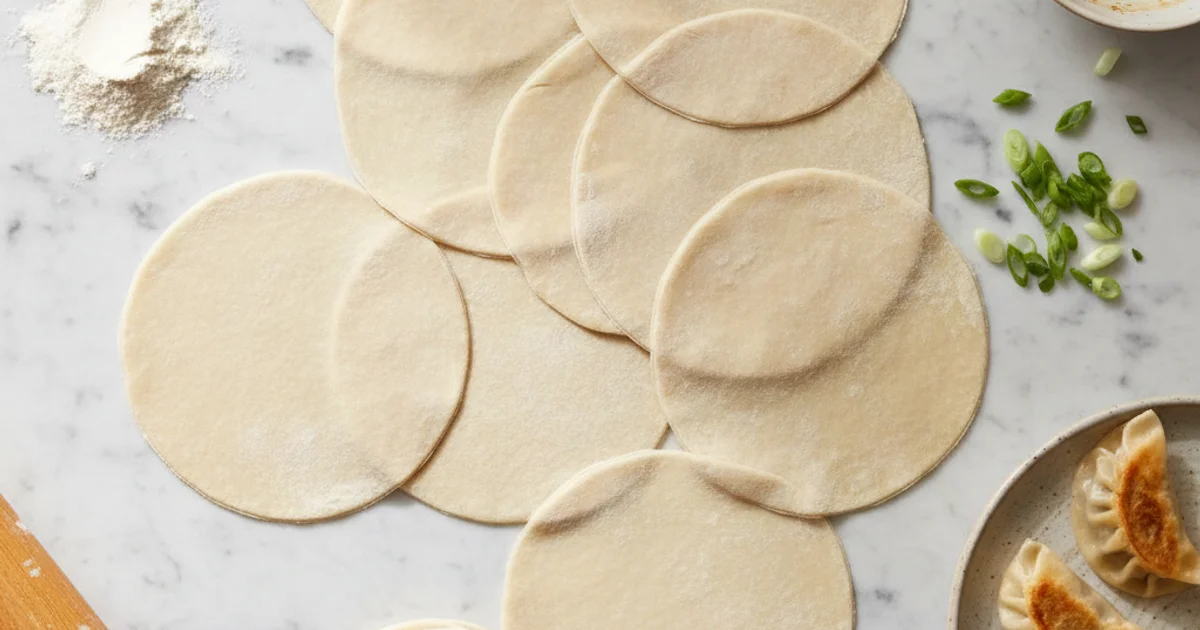
Roll each portion extremely thin between two sheets of parchment paper dusted with tapioca starch.
Instructions
Trim the edges into even squares, layer with parchment paper, and use immediately or store.
Recipe FAQs
Are egg roll wrappers gluten free?
Do egg rolls have gluten?
Are egg roll wrappers the same as wonton wrappers?
Can I make these wrappers vegan?
Why are my gluten free wrappers cracking when I roll them?
What is the nutritional profile of egg roll wrappers nutrition-wise?
Crispy Gluten-Free Egg Roll Wrappers
Learn how to make crispy gluten free egg roll wrappers at home. Perfect for gluten free egg rolls, spring rolls, and more. Easy step-by-step guide!
Prep Time
25 min
Cook Time
10 min
Total Time
35 min
Dry Ingredients
- 2 cups gluten-free 1-to-1 baking flour blend
- 1/2 cup tapioca starch (plus extra for dusting)
- 1 tsp xanthan gum
- 1/2 tsp fine sea salt
Wet Ingredients
- 3/4 cup boiling hot water
- 1 tbsp neutral oil (avocado or canola)
Introduction: Mastering Gluten Free Egg Roll Wrappers
Have you ever stood in the Asian grocery aisle staring at ingredient labels with pure disappointment? Traditional wrappers are packed with wheat, leaving anyone with celiac disease or sensitivities completely out of the loop. Let me answer the burning question right away: are standard egg roll wrappers gluten free? Spoiler alert, they are usually loaded with gluten, making a crunchy appetizer feel entirely off-limits. What I love about this kitchen project is how it completely flips the script on snack time.
Building on this, making homemade gluten free egg roll wrappers used to feel like an impossible baking challenge. In my kitchen, I spent months testing endless flour combinations to capture that authentic stretch and pliability. You will notice that achieving a shatteringly crisp exterior without wheat flour requires a very specific touch. Here is the thing: once you master this technique, you can easily fold up your favorite fillings without any tearing.
Trust me on this one, store-bought alternatives often taste like cardboard or disintegrate the second they hit hot oil. This reliable formula yields flexible sheets that fry up into bubbling perfection every single time. You can use this versatile dough seamlessly for both traditional gluten free egg rolls and lighter gluten free spring rolls. The trick is keeping your workflow steady so the pastry stays moist and ready for action. Let us dive right into the exact pantry staples you need to make this happen today.
Why You’ll Love This Homemade Gluten Free Egg Roll Wrap Recipe
In my kitchen, I always struggled to find store-bought gluten free egg roll wrappers that did not shatter into tiny pieces. What I discovered after months of recipe testing is that homemade dough gives you that authentic, pliable texture without any commercial additives.
Here is why this method completely changes your appetizer game:
- Incredible texture that rivals traditional wheat-based wrappers with zero gumminess.
- Naturally customizable and adaptable for vegan egg roll wrappers by swapping binder components.
- Cost-effective alternative to expensive, often disappointing specialty store brands.
- Freezable and make-ahead friendly for quick weeknight Asian-inspired meals.
Building on this, you will never have to wonder are egg roll wrappers gluten free at local grocery stores again. You control every single ingredient that goes into the mixing bowl. Trust me on this one, the peace of mind alone makes the process worthwhile.
Ingredients Overview: What Makes These Gluten Free Egg Roll Wrappers Work
Building on this, let us break down the exact science behind the structure of this dish. You need specific components to replicate that classic chew without traditional wheat flour.
Here is my master list of structural components:
- Gluten-free flour blend: The foundational base requiring a balanced mix of starches and ancient grains.
- Xanthan gum: The essential binder replacing wheat elasticity to prevent tearing during rolling.
- Tapioca starch: Adds stretch and promotes that sought-after restaurant-style bubble when fried.
- Hot water: Crucial for gelatinizing the starches and creating a pliable dough.
- Salt and oil: Enhance flavor while improving overall workability.
Here’s the thing about sourcing your ingredients for gluten free egg rolls. You cannot simply swap wheat flour one-to-one without losing structural integrity. Tapioca starch acts as our secret weapon for elasticity. Without it, your dough will crack instantly upon rolling.
What I discovered through countless kitchen tests is temperature control. You must use boiling water to activate the starch gelatinization process. Cold liquid will leave your mixture crumbly and unmanageable.
The key difference is how binders react with hot liquids compared to cool ones. Xanthan gum traps the moisture released by the boiling water. This creates a cohesive sheet that mimics traditional gluten free spring rolls wrappers.
In practice, weighing your dry ingredients yields better results than volume measuring. Too much flour makes the sheets rigid and impossible to roll. Too little moisture leaves you with a sticky mess that tears on the counter.
Here’s what actually works for measuring consistency. Your dough should feel like soft playdough rather than bread dough. If it sticks to your fingers, dust your work surface lightly with more starch.
Worth noting here is the inclusion of neutral oil in the water mixture. This fat coats the protein particles and keeps the dough supple. You will notice that vegan egg roll wrappers rely heavily on this fat-to-water ratio for flexibility.
A common mistake is skipping the rest period after mixing the dough. Letting the ball rest for twenty minutes allows the flours to fully hydrate. This simple pause transforms a lumpy mixture into a smooth, elastic sheet.
The secret is working with the dough while it remains comfortably warm. Cold dough loses its stretch and shatters when you try to fold it. Keep your unused portions covered with a damp towel to trap the steam inside.
Essential Kitchen Equipment You’ll Need
Having the right gear makes all the difference when dealing with delicate doughs. To successfully craft your gluten free egg roll wrappers, gather a digital kitchen scale for precise starch measurements, a standard rolling pin, parchment paper sheets, and a sharp pizza wheel for clean cuts.
Once your wrappers are cut and ready, proper handling and storage are crucial to prevent drying or sticking. Lightly dust your finished sheets with tapioca starch and stack them between squares of parchment paper. If you aren’t using them immediately, seal the stack tightly in an airtight container or a zip-top freezer bag. They can be refrigerated for up to three days or frozen for up to a month. When ready to use frozen wrappers, thaw them overnight in the refrigerator before gently peeling them apart at room temperature.
To assemble and cook, place a wrapper on a clean surface, add your favorite savory filling to the center, and fold in the sides before rolling tightly. Seal the final edge with a dab of water or a light slurry. Fry the rolls in neutral oil heated to 350°F (175°C) until golden brown and crispy, about 4 to 5 minutes, then drain them on a wire rack to maintain that ultimate crunch.
Step-by-Step Instructions for Perfect Gluten Free Egg Roll Wrappers
-
In a large bowl, whisk together the gluten-free flour blend, tapioca starch, and xanthan gum until thoroughly combined and evenly distributed.
-
Slowly pour boiling hot water into the dry mixture while stirring continuously with a wooden spoon until a warm, cohesive dough ball forms.
-
Turn the dough out onto a clean, lightly starched surface and knead firmly for 3 to 5 minutes until smooth and elastic. Cover tightly with a damp towel and let rest for 20 minutes so the starches hydrate.
-
Divide the dough into equal portions. Place one piece between two sheets of lightly greased parchment paper and roll it out as paper-thin as possible.
-
Remove the top parchment sheet and use a sharp knife or pizza cutter along a square template to trim the edges into uniform squares.
-
Assemble and Cook: Spoon your favorite filling into the center of each square. Fold in the sides, roll tightly, and seal the edges with a touch of water. To cook, shallow-fry the rolls in hot oil at 350°F (175°C) for 3 to 4 minutes, turning occasionally until golden brown and crispy, then drain on a wire rack. Alternatively, brush them generously with oil and air fry at 400°F (200°C) for 8 to 10 minutes, flipping halfway through.
-
Storage: Layer unused raw squares between sheets of parchment paper to prevent sticking, then store them in an airtight container in the refrigerator for up to 3 days. For longer storage, freeze the parchment-separated squares in a heavy-duty freezer bag for up to 2 months. Thaw overnight in the fridge before filling and cooking.
Pro Tips & Tricks for Working with Gluten Free Egg Roll Wrap Dough
Keeping dough pliable is the biggest hurdle when making gluten free egg rolls at home. I always keep the remaining dough covered with a damp kitchen towel while shaping each sheet.
- Never skip the damp towel step.
- Dry air causes immediate cracking.
- Keep your workspace slightly humid if possible.
Here’s the thing about dusting your surface. Dust liberally with tapioca starch instead of extra flour to avoid a pasty texture.
- Tapioca starch creates a smooth barrier.
- Avoid all-purpose gluten free blends for dusting.
- Too much flour makes the dough gummy.
Master the rolling technique by applying gentle, even pressure from the center outward.
- Use a lightweight rolling pin for better control.
- Rotate the dough frequently to maintain a circle.
- Aim for paper-thin edges without tearing.
Control oil temperature carefully when frying to ensure the wrapper crisps up before absorbing too much grease.
- Heat oil to 350 degrees Fahrenheit.
- Test a small dough scrap before frying batches.
- Drain finished rolls on a wire rack instead of paper towels.
Enjoyed this recipe? Share it with a friend or save it to your board for later. Leave a comment below — I love hearing how it turned out!
You May Also Enjoy
You Might Also Love These 🍽️
Recipes picked just for you based on what you’re cooking